


In an era of geopolitical uncertainty, volatile demand and increasingly complex supply chains, companies are rethinking how they manage both transportation and inventory. Assets that were once viewed purely as logistics equipment are now playing a broader strategic role. Among them, the tank container is emerging as a valuable tool for improving supply chain resilience and operational flexibility.
Today, however, supply chains look very different. Demand fluctuates more quickly, disruptions occur more frequently and companies are under growing pressure to balance efficiency, resilience and cost. As disruption becomes a defining characteristic of modern supply chains, resilience has moved to the top of the agenda.
As a result, tank containers are increasingly being viewed as more than just transport equipment. They are becoming valuable tools for managing inventory and improving operational flexibility.
Why Supply Chain Requirements Are Changing
Supply chains today must contend with a growing number of variables. Geopolitical tensions, transportation bottlenecks, shifting demand patterns and economic uncertainty can quickly affect production schedules, inventory levels and customer service performance.
For companies operating chemical and dangerous goods supply chains, resilience is no longer simply a competitive advantage. It has become a business necessity. The ability to respond quickly to unexpected disruptions while maintaining safety, compliance and operational efficiency is increasingly critical.
At the same time, investments in permanent storage facilities remain costly, while future demand is often difficult to predict. As a result, many organizations are looking for ways to increase agility and strengthen inventory strategies without making significant long-term infrastructure investments.
This is a trend seen across various industries:
- Chemicals & Petrochemicals
- Food Ingredients
- Base Oils and Lubricants
- Industrial Liquids
These changing requirements are expanding the role of the tank containers beyond transportation alone.
The Tank Container as a Supply Chain Tool
Traditionally, the value of a tank container was measured by how efficiently it moved product from one location to another. Increasingly, however, companies are discovering that tank containers can deliver value long before loading and long after arrival.
Used strategically, they can support inventory management, production continuity and contingency planning while providing an additional layer of operational flexibility.
Mobile Storage Solutions & Production Buffer Capacity
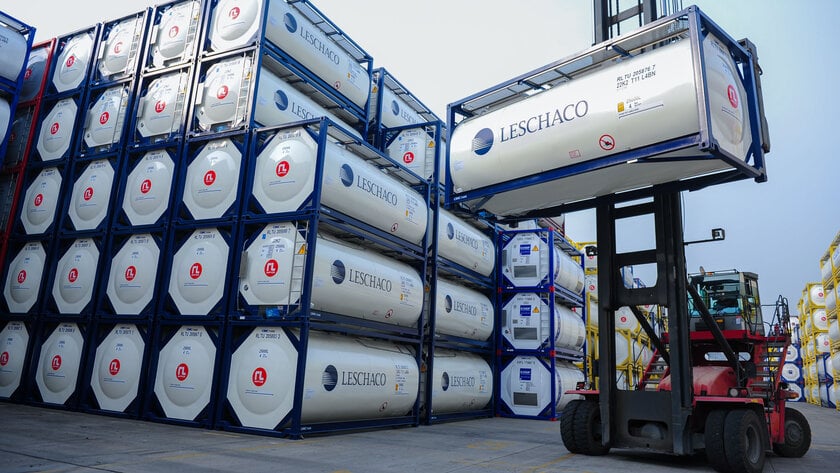
One of the most valuable applications of tank containers is their ability to provide temporary storage and buffering capacity.
When production output, customer demand and transportation schedules become misaligned, tank containers can help bridge the gap without requiring immediate investment in fixed storage infrastructure.
This additional capacity can help companies:
- Align production and demand more effectively
- Manage seasonal or short-term volume peaks
- Maintain production during maintenance shutdowns
- Absorb temporary transport or supply bottlenecks
- Reduce dependency on permanent storage assets
Strategic Inventory Positioning
Recent years have highlighted the importance of placing inventory closer to production facilities, customers, or regional markets.
Tank containers can support this strategy by creating greater responsiveness across the supply chain. Instead of concentrating inventory in a limited number of locations, companies can strategically place products where they are most likely to be required, reducing response times and improving service levels.
This approach can also help mitigate the impact of supply disruptions while reducing replenishment lead times. For global operations serving multiple markets, the ability to position inventory more dynamically can become a significant competitive advantage.
Multimodal Flexibility
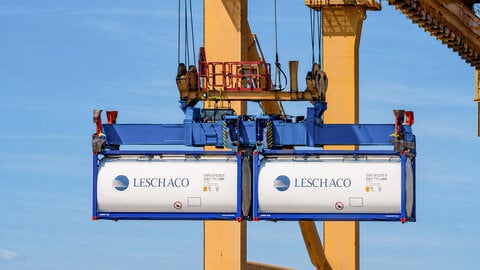
One of the defining strengths of tank containers remains their intermodal design. They can move seamlessly between sea freight, rail, truck and barge without requiring cargo transfers between transport modes.
This delivers several important advantages:
- Greater routing flexibility
- Faster adaptation during disruptions
- Reduced cargo handling
- Lower contamination and damage risks
- Improved transport efficiency
In an environment where unexpected events can quickly disrupt established logistics routes, the ability to adjust transportation strategies without compromising cargo integrity has become increasingly valuable.
Product Integrity and Safety
For chemicals and dangerous goods, product integrity is directly linked to safety.
Tank containers transport products within a closed system and can be equipped with insulation, heating systems, specialized linings and other features tailored to specific cargo requirements. Because the product remains inside the same vessel throughout transport and storage, handling-related risks are significantly reduced.
This closed-loop approach not only helps protect product quality but also minimizes operational risk. For sensitive chemical products and dangerous goods, maintaining product integrity throughout the supply chain remains a critical component of both safety performance and regulatory compliance.
Together, these advantages address many of the challenges facing modern chemical and dangerous goods supply chains, where operational agility, inventory responsiveness and business continuity have become increasingly important.
What Companies Should Consider
Using tank containers beyond transportation also requires careful planning and a thorough understanding of operational requirements.
Key considerations include:
- Storage duration limitations
- Product compatibility
- Tank specifications and certifications
- Inspection and maintenance requirements
- Cleaning considerations
- Local regulatory compliance
Particularly in dangerous goods logistics, regulatory requirements remain a critical consideration. Successful implementation depends not only on selecting the right equipment but also on integrating tank container strategies into broader supply chain planning and inventory management processes.
How Leschaco Supports Flexible Tank Container Strategies
As supply chains become more complex, companies increasingly require solutions that combine transportation, inventory management and contingency planning.
We support customers with integrated tank container concepts that go beyond traditional logistics. By combining global tank container expertise, chemical and dangerous goods know-how and multimodal transport capabilities, we help organizations build supply chains that are more adaptable, efficient and resilient.
Our approach connects transport, storage and supply chain planning into a coordinated solution designed to maintain reliable cargo flows while supporting changing business requirements.
Looking Ahead
Tank containers will always play a vital role in the safe and efficient transportation of liquid bulk cargo. Their role, however, is evolving.
As companies look for new ways to strengthen supply chain resilience without committing to significant fixed infrastructure investments, tank containers are increasingly becoming strategic assets rather than simply transport equipment.
Whether deployed for temporary storage, production buffering, inventory positioning, or contingency planning, they offer a level of adaptability that traditional logistics models often struggle to provide.
For chemical and dangerous goods supply chains navigating an increasingly unpredictable business environment, unlocking the full potential of tank containers can improve operational resilience, strengthen agility and create lasting competitive advantages. As supply chains continue to evolve, organizations that leverage tank containers strategically will be better positioned to respond to change and maintain continuity in an uncertain world.