


The map of global manufacturing is being redrawn and nowhere is this transformation more visible than in Asia-Pacific.
While China remains at the center of this development, industrial growth is increasingly spreading across the wider APAC region. A deep dive into this landscape reveals the uniqueness of the region and how manufacturing, trade and logistics are adapting together, creating opportunities and supply chain challenges.
China: The Industrial Powerhouse
For decades, China has been the undisputed center of global manufacturing. Companies built supply chains around the country's industrial strength. In tandem, extensive supplier networks and world-class logistics infrastructure emerged. Ports expanded, rail corridors connected production metropolises with global export markets and entire industries developed around the highly efficient Chinese production ecosystems.
China has been a relevant player in key industries, and as of today remains a global leader across sectors such as:
- Chemicals
- Electronics
- Automotive
- Batteries and electric vehicles
- Renewable energy technologies
- Advanced manufacturing
The Chinese industry continues to evolve: Increasing automation, digitalization and higher-value production are helping manufacturers maintain competitiveness, while a growing domestic market creates additional opportunities.
The APAC Region is Emerging
As China remains a dominant force, the broader Asia-Pacific region is becoming increasingly important as companies diversify production, strengthen supply chain resilience and build closer connections to emerging consumer markets.
Many companies have adopted "China+1" or "China+N" strategies, spreading production across one or several additional countries instead of concentrating operations in a single location.
Several APAC markets are attracting increasing levels of industrial investment:
- Vietnam continues to benefit from electronics manufacturing, consumer goods production and supplier relocations, with exports increasing by 21% year-on-year in the first half of 2026.
- Malaysia is attracting investments in chemicals, semiconductors and advanced industrial production, with approved investments reaching a record RM426.7 billion in 2025, up 11% year-on-year.
- Thailand remains a key hub for automotive and industrial manufacturing, with the country hosting 57 automotive OEM locations and more than 2,400 automotive parts suppliers.
- Indonesia is gaining importance in battery materials, mining and EV supply chains, with processed nickel production increasing from around 22,000 tonnes in 2014 to more than 1.4 million tonnes in 2023, making Indonesia the world's largest producer.
Rather than replacing China, these markets complement it. Components, raw materials and finished goods increasingly move between countries in APAC before reaching global end markets. The region is becoming less of a collection of individual manufacturing locations and more of an interconnected production network.
As Industries Move, Logistics Move with Them
Every industrial shift creates new cargo flows.
As manufacturing expands across APAC, logistics networks are adapting to support increasingly regionalized supply chains. While East-West trade remains important, intra-Asia trade is becoming a major growth driver.
Export flows from APAC to both the Americas and EMEA are being reshaped. Cargo that was once concentrated in a handful of Chinese gateways is increasingly moving through a broader network of production hubs, ports and airports across the region.
Sea Freight
- Growing intra-Asia shipping volumes
- Increased importance of regional feeder services
- More direct port connections across Southeast Asia
- Diversified export flows from APAC to the Americas and EMEA
Air Freight
- Greater movement of high-value electronics and semiconductor products
- Emerging airport hubs outside traditional gateways
- Increased demand for time-sensitive transportation
Contract Logistics
- Expansion of regional warehousing networks
- Inventory positioning closer to end markets
- Multi-country distribution strategies
Rail
- Growing use of Eurasian rail corridors connecting China and selected APAC supply chains with Europe
- Additional flexibility between Sea Freight and Air Freight for time-sensitive cargo
Companies are increasingly asking where inventory should be positioned and how logistics networks can be structured to respond quickly when market conditions change.
For chemical and dangerous goods supply chains, this is particularly important. Compliance requirements, specialized handling and transportation restrictions require logistics solutions that extend well beyond the transport itself.
Singapore: The Strategic Logistics Hub
As manufacturing expands beyond China and across APAC, supply chain coordination is becoming more important and also centralized.
Singapore has evolved far beyond its traditional role as a transshipment hub. Today, it serves as one of the region's most important supply chain management centers, connecting production, warehousing and distribution activities across APAC.
Its position is supported by:
- World-leading Sea Freight connectivity
- Strong Air Freight infrastructure
- Stable regulatory frameworks
- Advanced customs and digital trade processes
- Regional headquarters functions for multinational companies
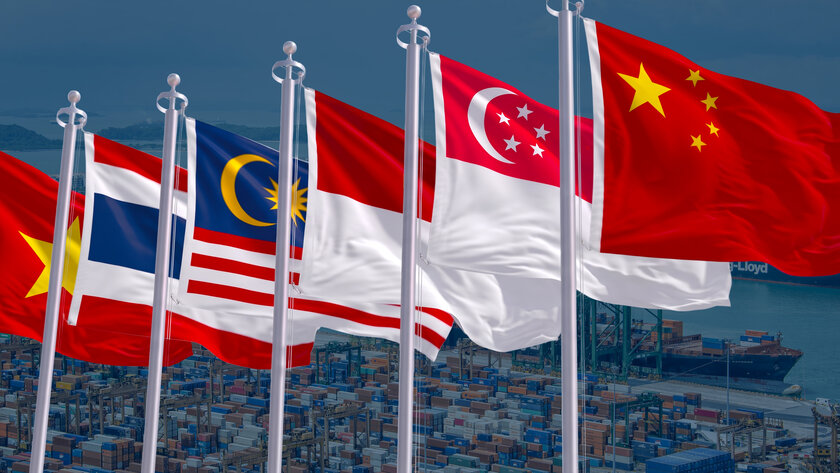
For companies operating across China, Vietnam, Malaysia, Thailand and Indonesia, Singapore often acts as the central node connecting suppliers, manufacturing facilities, warehouses and customer markets.
As APAC’s supply chains become more interconnected, Singapore remains at their center.
More Opportunities means More Complexity
While Singapore grows with the industries around it, complexity also grows across the region, creating additional pressure points:
- Infrastructure constraints in emerging markets
- Changing trade policies and customs requirements
- Typhoon-related disruptions across Asia
- Capacity fluctuations during peak seasons
- Golden Week and Chinese New Year disruptions
- Different dangerous goods regulations across markets
Disruptions rarely occur in isolation. Weather events, capacity limitations, regulatory changes and rising cargo volumes can affect multiple parts of the supply chain at the same time. A great example is this year’s September Peak Season, becoming a stress test for global supply chains.
Diversification strengthens resilience, but it also makes supply chain management more complex.
How Leschaco Supports Regional Supply Chain Strategies
As industrial growth spreads across APAC, logistics providers must support increasingly interconnected supply chains.
This growing complexity places greater importance on logistics networks that can connect established manufacturing centers with emerging production hubs while providing the flexibility to adapt as supply chains evolve.
Our presence across Mainland China, Hong Kong SAR, Indonesia, Japan, Malaysia, Singapore, South Korea, Thailand and Vietnam enables customers to manage cargo flows between established manufacturing centers and emerging production locations.
Our halal certified logistics hub in Singapore as well as our facility in Port Klang, Malaysia support customers with the flexibility required to connect production sites, distribution centers and global markets.
Where industries move, logistics follow. As supply chains become more diversified across APAC, partnerships that deliver visibility, flexibility and regional expertise will help companies navigate complexity and support long-term success.