



In an increasingly complex global environment, leadership has become one of the most critical factors for organizational success. While structures, systems, and strategies define direction, it is leadership behavior that determines how things truly work in everyday business – and how culture becomes visible, credible, and sustainable.
At Leschaco, cultural transformation is not a theoretical ambition. It is a strategic priority, anchored globally in our Big Picture 2030. Leaders play a central role in this journey: they translate strategy into daily behaviors, support teams through uncertainty, and shape how our culture is experienced in practice – all while navigating the many pressures and paradoxes of modern leadership.
Leadership as a Strong Lever
From a neuroscientific perspective, the connection is immediate. As the Roth Institute highlights, our brain recognizes inconsistencies instantly. Words without aligned behavior trigger distrust, stress, and disengagement – long before we are consciously aware of it.
The brain understands – and trust declines – when words are not followed by attitude or action.
– Roth Institute
In cultural transformation, this makes leadership behavior a powerful multiplier. Not through perfection – but through authenticity, clarity, and daily micro-actions in everyday situations.
The Reality: Leadership Under Pressure
Modern leadership does not take place in a protected space. Middle and operational leaders in particular navigate a demanding balancing act: tight deadlines, operational responsibilities, diverse teams and cultures, and the need to communicate clearly in times of uncertainty and change. They also face a daily tension between delivering results and maintaining meaningful human connection with their teams.
This is not a question of commitment – it is a question of context. Leadership takes time, attention, and supportive structures.
Heidrick & Struggles repeatedly highlight a common dilemma in leadership transformation:
Leaders are expected to change their behavior while the system around them often remains unchanged.
Cultural change therefore cannot rely on individual leaders alone. Leadership therefore becomes effective when the surrounding system supports what leaders are asked to embody – through clarity, realistic workloads, psychological safety, and alignment between strategy and daily practice.
Modern Leadership: What It Means & What We Worked on at Leschaco
Modern leadership is not defined by titles, but by the ability to create clarity, provide orientation, enable dialogue, support decision-making, and role-model the culture we want to see. It rests on three connected elements:
- Mindset: integrity, clarity, and the willingness to lead even in uncertainty.
- Action: everyday communication, decisions, and micro- behaviors that make values visible.
- Context: structures and routines that enable leaders rather than compete with them.
To strengthen leadership in ways that are practical, supportive and connected to our Culture Journey, we focus on initiatives that make culture more visible and actionable in everyday work.
Three examples:
Culture Week 2025 – Space for Context, Dialogue and Real Stories
Our second global Culture Week in September 2025 provided a shared format for context-setting, reflection and dialogue. At the Culture Wall, leaders and employees across levels and regions were invited to share practical stories they are proud of – inspiring others, highlighting best practices, and making cultural transformation even more tangible across our organization.
GEES Team Workshops – Strengthening Team Dialogue and Feedback
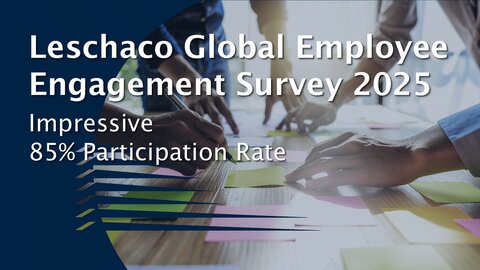
The GEES Team Workshops give leaders and teams a structured opportunity to discuss what worked well, what required change, and where improvements were realistic. Together, the teams translated their survey results into concrete actions within their Circle of Influence – demonstrating that meaningful progress is not the responsibility of leaders alone, but a shared effort and a collective strength.
Leadership Model – Creating Clarity in Times of Change
As part of our cultural transformation, we are developing a Leadership Model that translates the expectations for the future into clear, practical behaviors. Aligned with our Big Picture 2030, our Competency Framework, and insights from teams worldwide, it reflects how leadership is lived in real situations. The model provides clarity on what is expected in leadership roles and gives employees a transparent understanding of what they can count on from those who guide their teams and what the organization commits to strengthening. Leadership development efforts will follow this logic through modular, practical learning formats that fits the realities of daily work.
Why Leadership in Cultural Transformation Matters
Cultural transformation is not a communication exercise. It is not a training and it is not a poster.
Culture is a system of behaviors, routines, expectations, and structures that shape how people collaborate, decide, and innovate. Leadership is a decisive part of this system – but never the only one.
Transformation succeeds when strategy, structure and behavior reinforce each other.
Final Thoughts: Leadership Is Collective Responsibility
Leadership is demanding, and transformation succeeds when words and actions align, when our systems support the behaviors, we want to see. Because culture does not change through posters – but through people who make change possible and a reality.